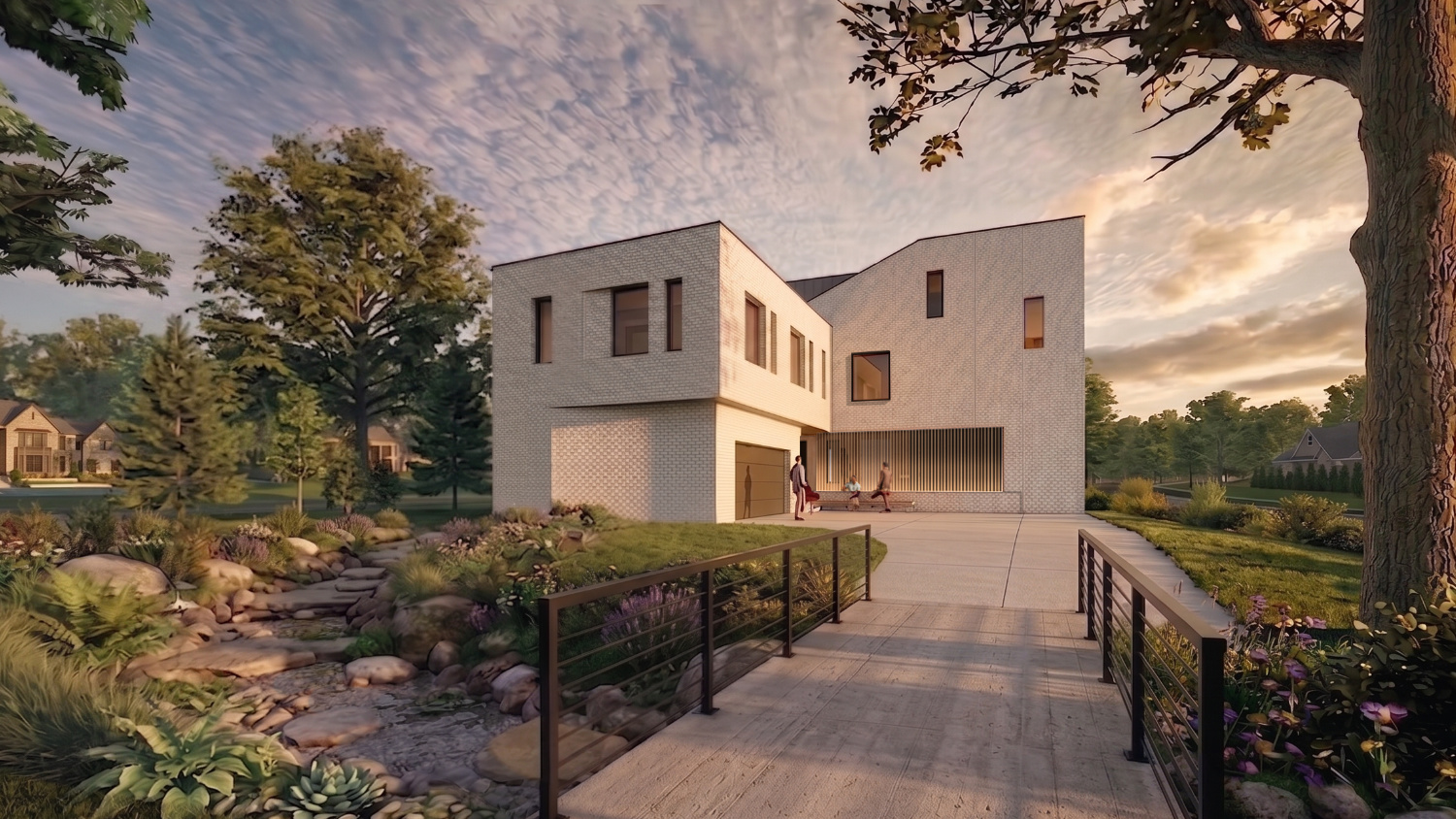
The first budget conversation should establish what is included, what is still unknown and which design and site decisions will have the greatest influence. Comparing isolated headline prices can create false confidence.
Define the total project budget
Separate land and acquisition costs, financing and carrying expenses, surveys, architecture and engineering, permit costs, sitework, utilities, house construction, landscaping and contingency.
A builder's construction proposal may not include all these costs. Make sure everyone is working from the same definition of the project budget.
Start with the site, not just square footage
Topography, ground conditions, retaining walls, access, floodplain requirements and utility distances can create substantial differences between otherwise similar houses.
A limited early feasibility review can identify critical assumptions before an ambitious design is refined around the wrong budget.
Identify the big design drivers
Structural spans, extensive glazing, exterior material systems, low-slope roofs, specialized stairs, large kitchens and custom built-ins can influence costs.
Cost planning is most useful when it tests alternatives that preserve the architectural intent while making construction choices more deliberate.
Compare estimates on equal terms
Request clear allowances, exclusions, material specifications, sitework assumptions and an explanation of how much is based on actual subcontractor quotes.
Two builders can produce very different totals for essentially the same project if one omits substantial work or carries optimistic allowances.
Allow time for more than construction
Feasibility, design development, consultant coordination, engineering, permitting, long-lead procurement and construction each require time. The project schedule must reflect their interdependence.
An early completion target can guide decisions but should be adjusted as scope, approvals and long-lead items become known.
Plan for uncertainty and decisions
Include a reasonable contingency and distinguish true unknown conditions from changes requested after decisions were made. Document the timing of owner selections, budget updates and decision deadlines.
A transparent review process can be more valuable than a suspiciously precise early estimate.
What to take away
Ask for one consolidated project budget, a list of assumptions and exclusions, and a staged process for updating confidence as drawings and bids become more complete. The best early estimate tells you what still needs to be decided.